Poly Stainer
Slide stainer
*Cat. 90005100 (ex-works)
About Poly Stainer
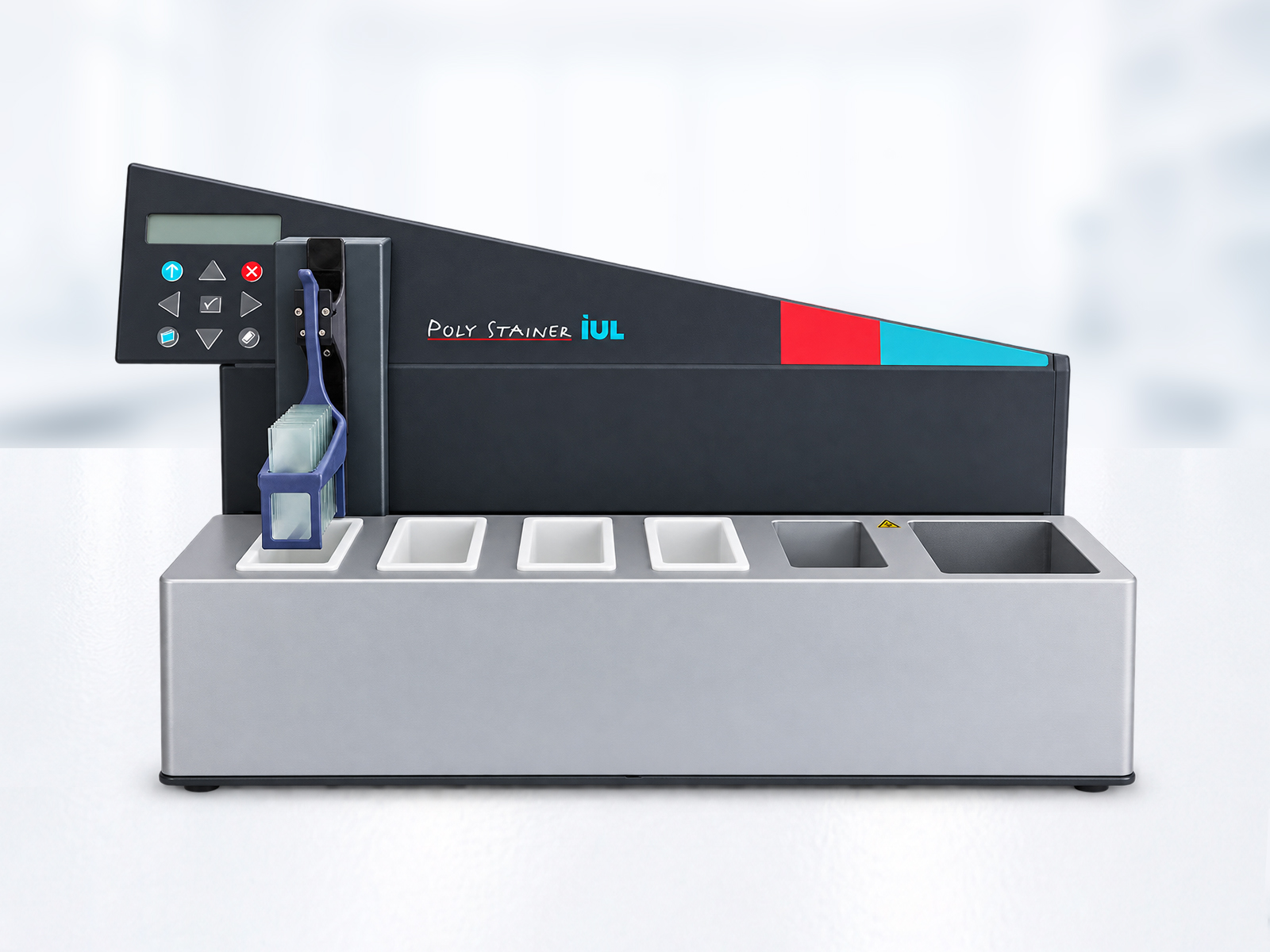
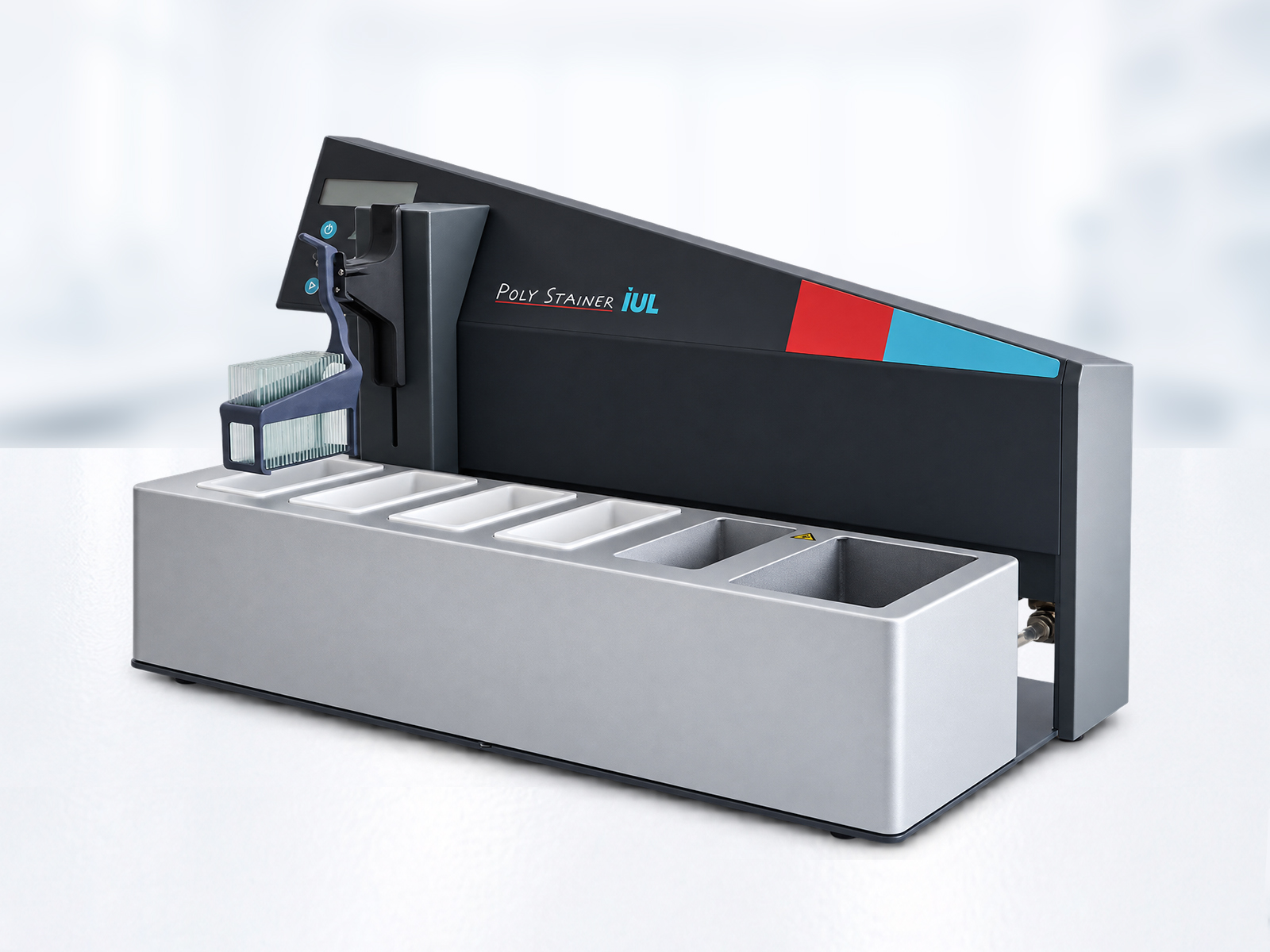
The Poly Stainer is a fully programmable robotic staining system designed to bring consistency, efficiency, and flexibility to microscopy laboratories. Capable of processing up to 24 microscope slides simultaneously, it automates routine staining workflows to help reduce hands-on time and improve result reproducibility.
Designed for reliable day-to-day operation, the Poly Stainer delivers uniform, high-quality staining while minimizing workflow variability. Its flexible, programmable platform adapts to a wide range of laboratory requirements, making it an ideal solution for laboratories seeking greater efficiency and consistent staining performance.
Key Benefits
Start staining with a single button press.
Standardized and accelerated routine staining with up to 24 slides per run.
Reduce inter-operator staining variability.
Minimize spills, reagent handling and bench contamination for a more organized workflow.
Workflow
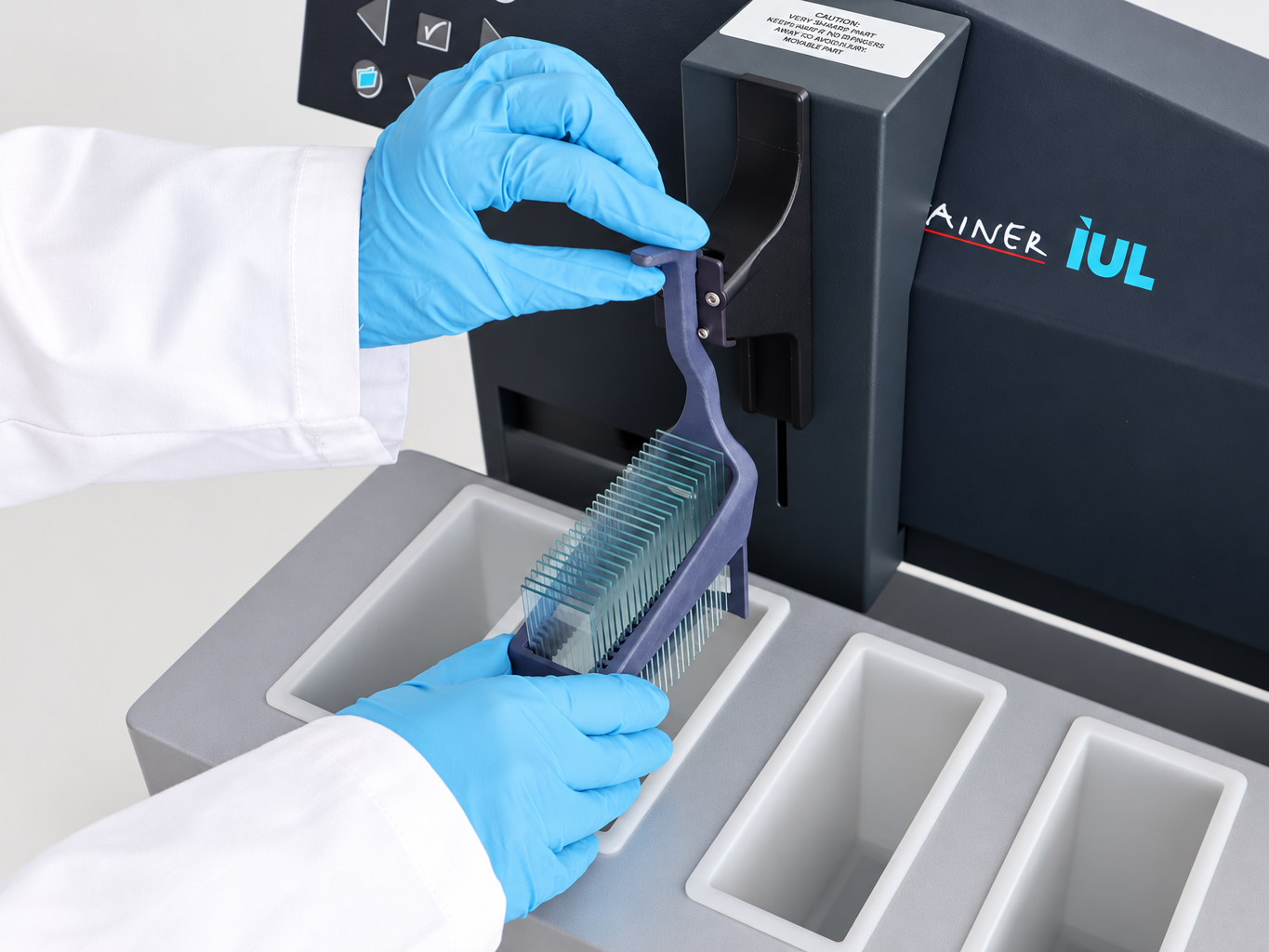
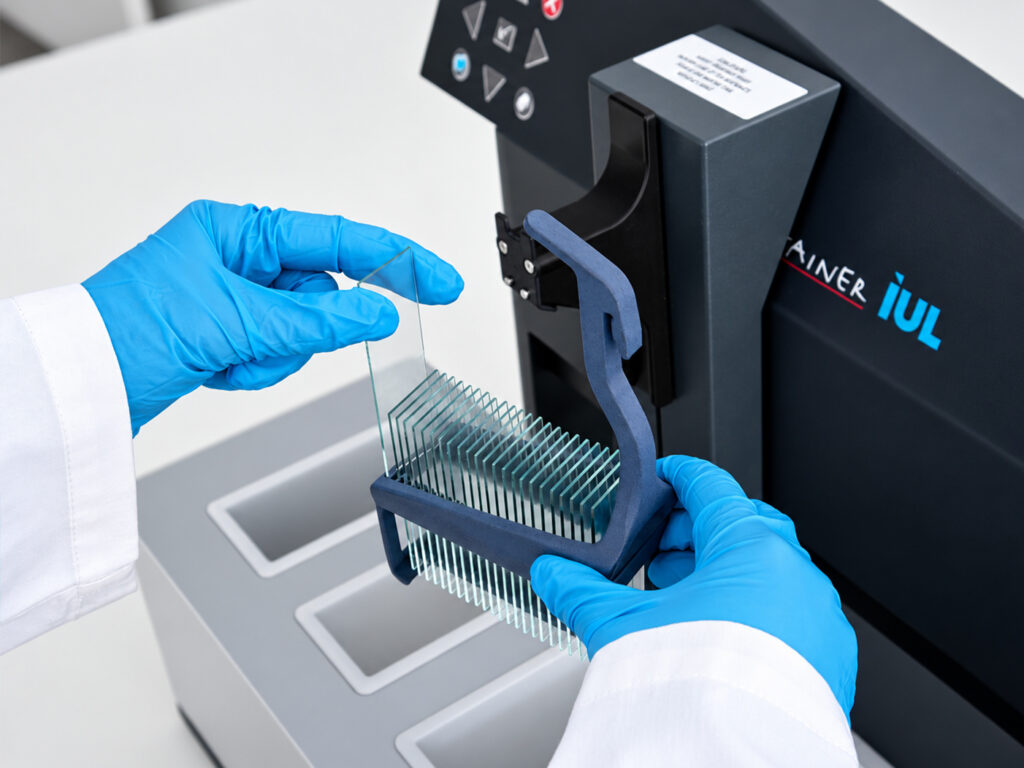
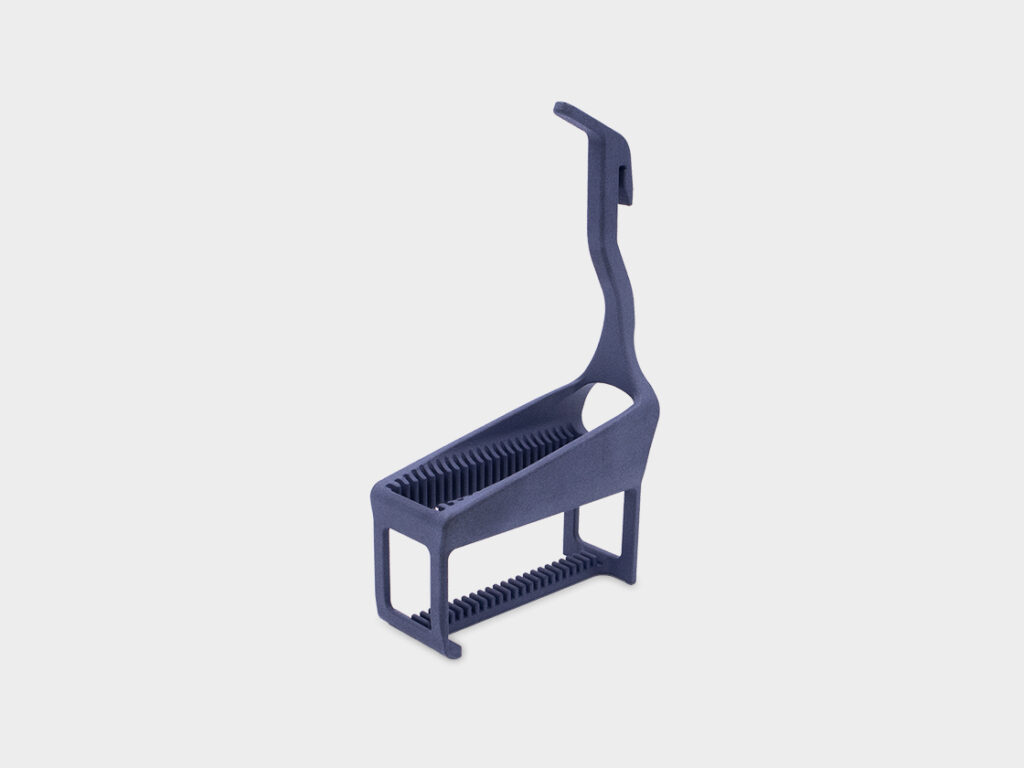
Place the slides in the basket
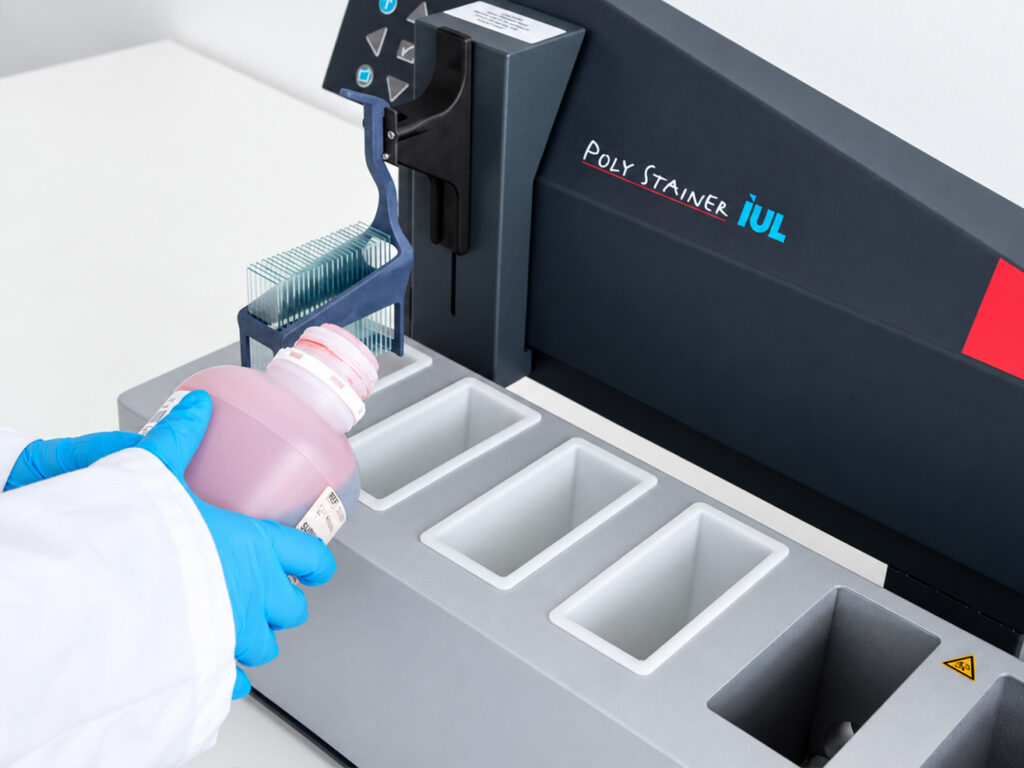
Fill the reagent wells
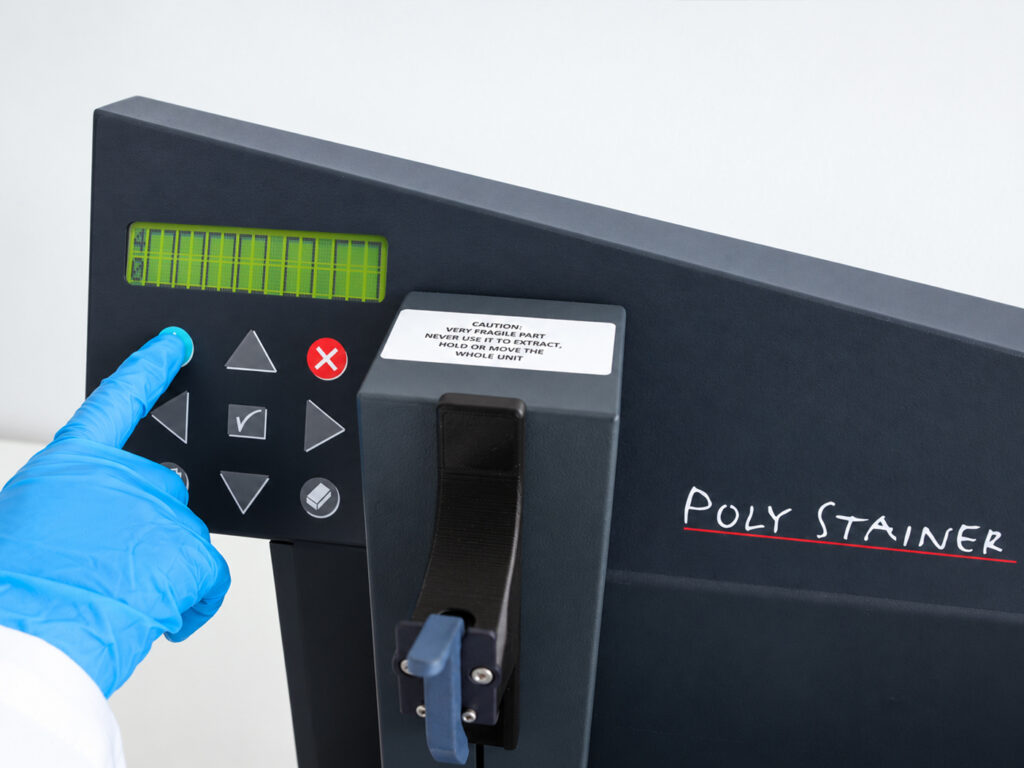
Choose the program and press Run
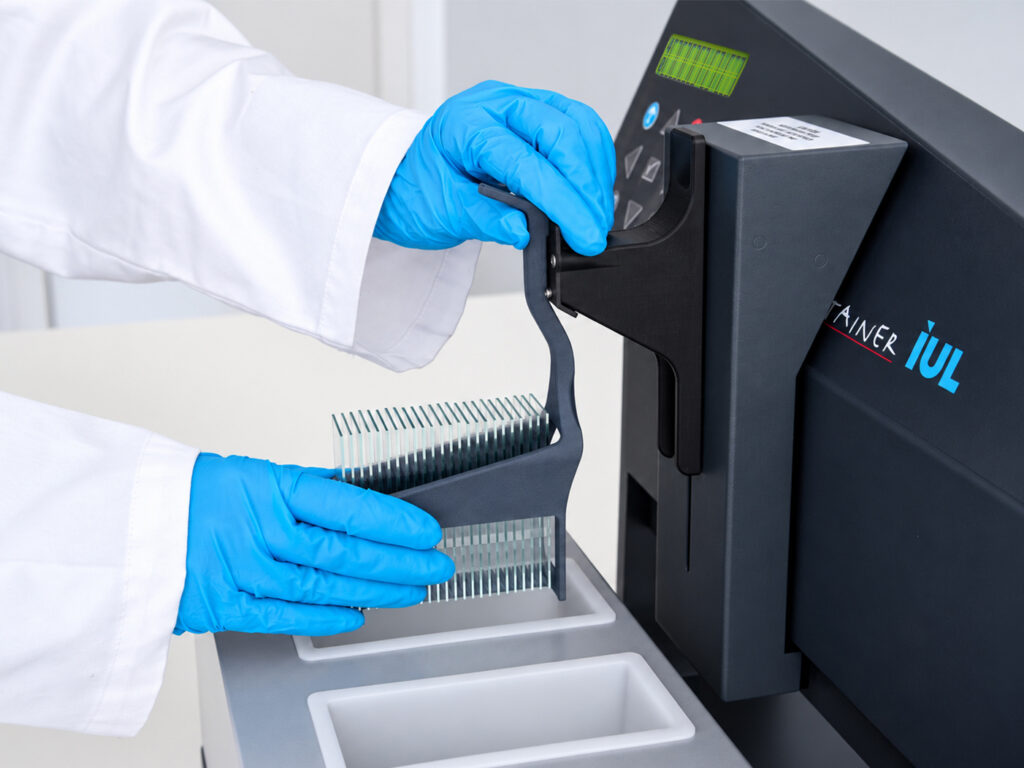
Collect the samples
Our Solution at Work
Product Insights
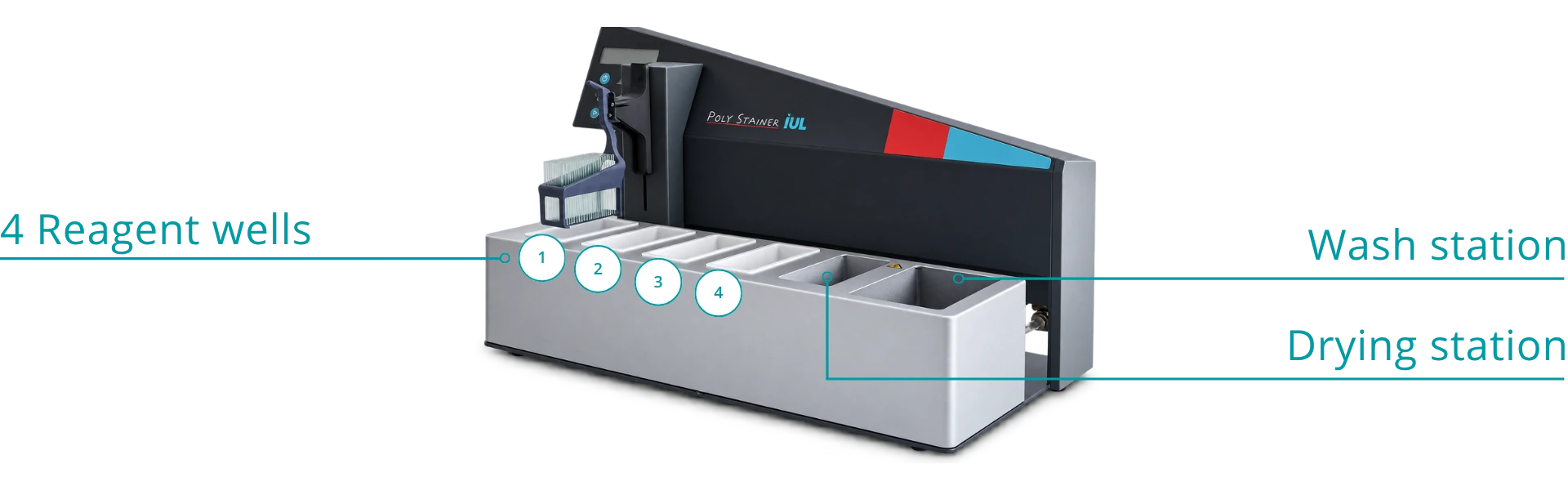
Work with commercial reagents using four reagent wells, one washing station, and one drying station in an open-system design.
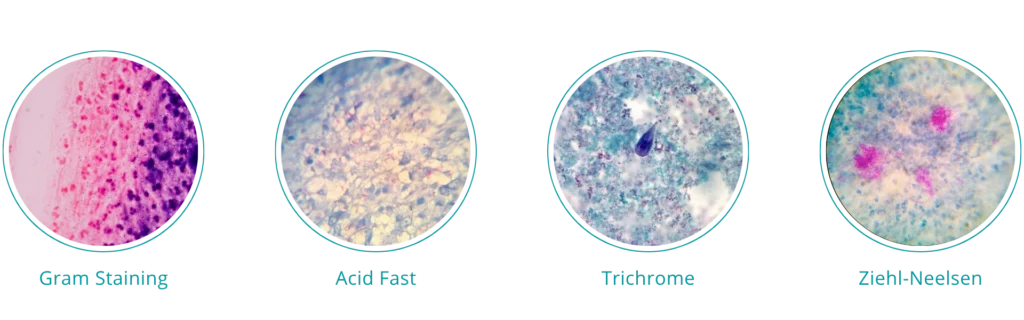
Store up to 10 programs with 10 steps each, enabling automation of protocols such as Gram, Acid-Fast, Trichrome, and Ziehl–Neelsen staining.
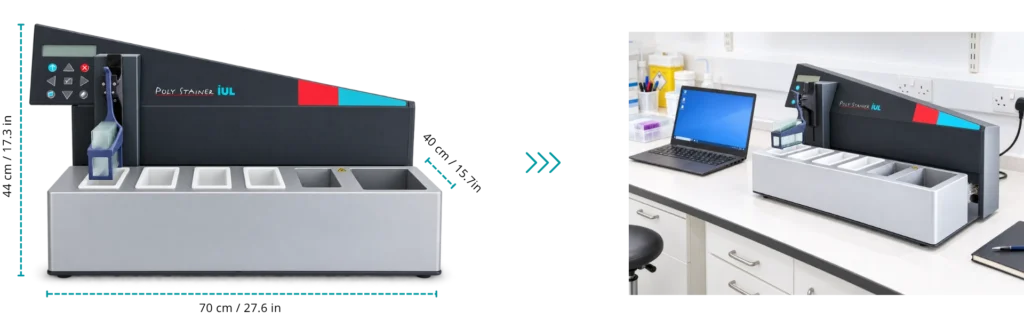
Bring automated slide staining to laboratories with limited workspace through a compact, space-saving design.
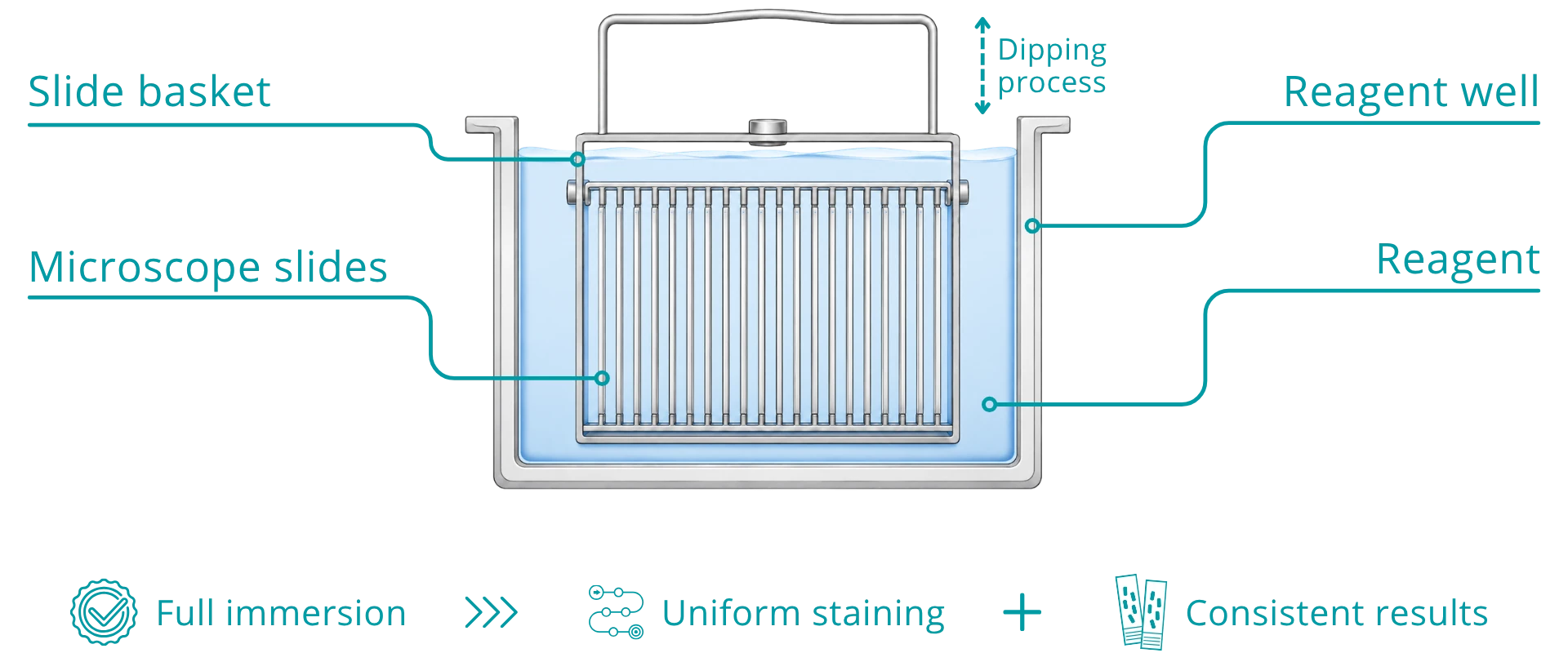
The Poly Stainer uses an automated reagent dipping process to deliver consistent, high-quality slide staining. By fully immersing each slide in the staining solution for a controlled period, the system ensures uniform reagent coverage, optimal dye penetration, and reproducible staining intensity across samples. The contained reagent wells also help minimise evaporation, supporting stable reagent performance and reliable results throughout the staining workflow.
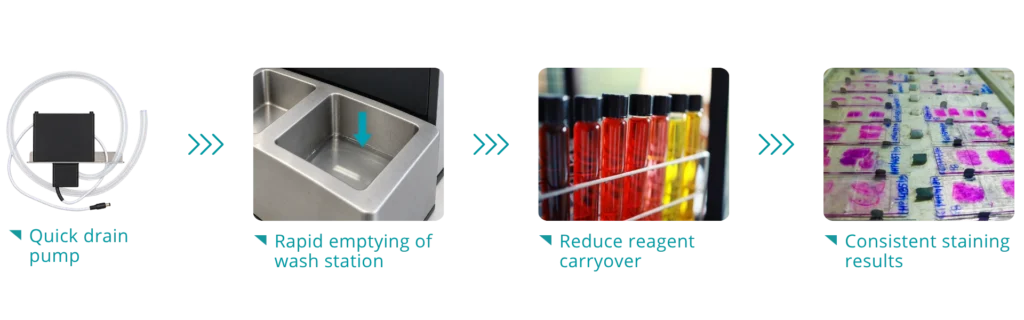
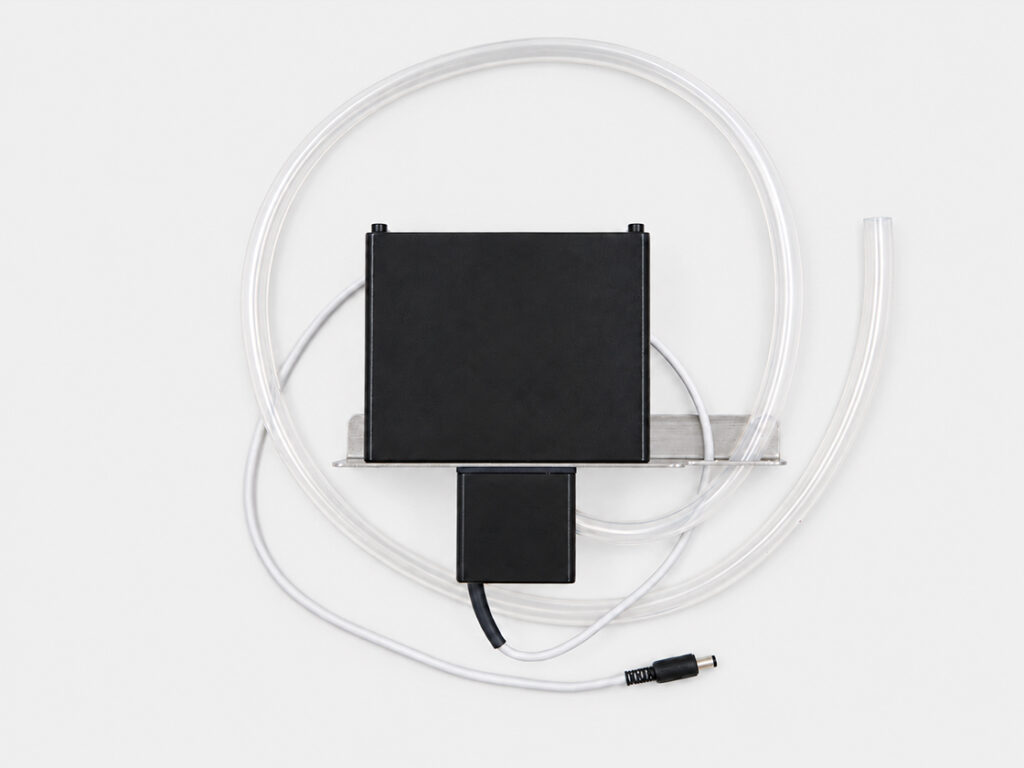
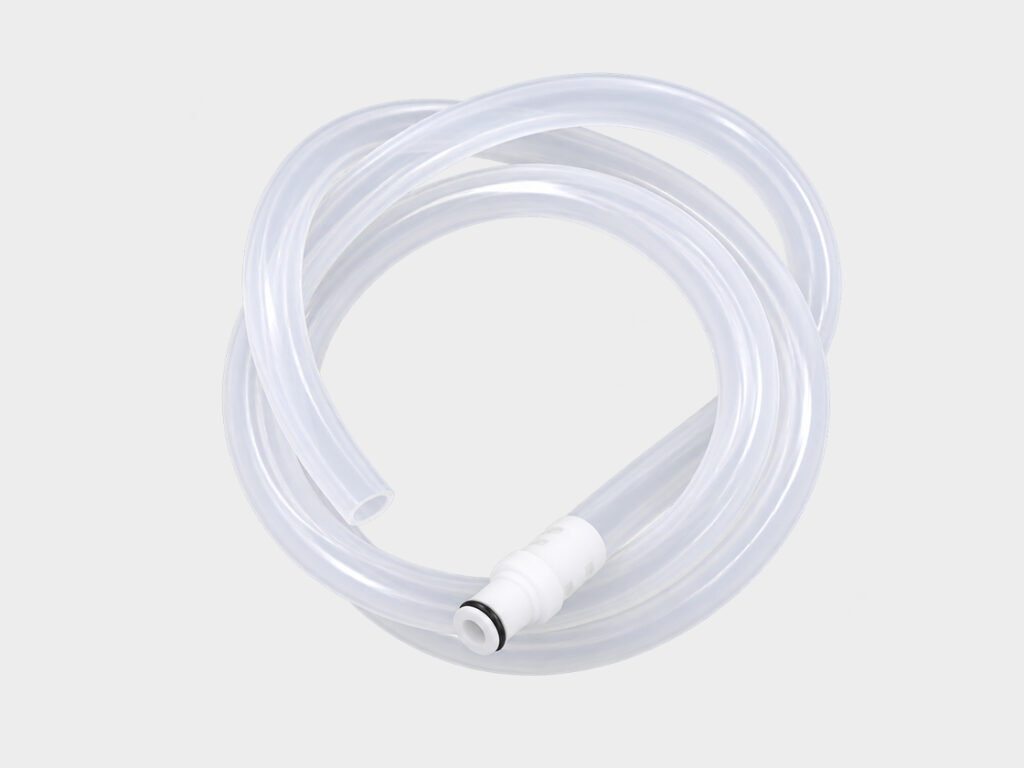
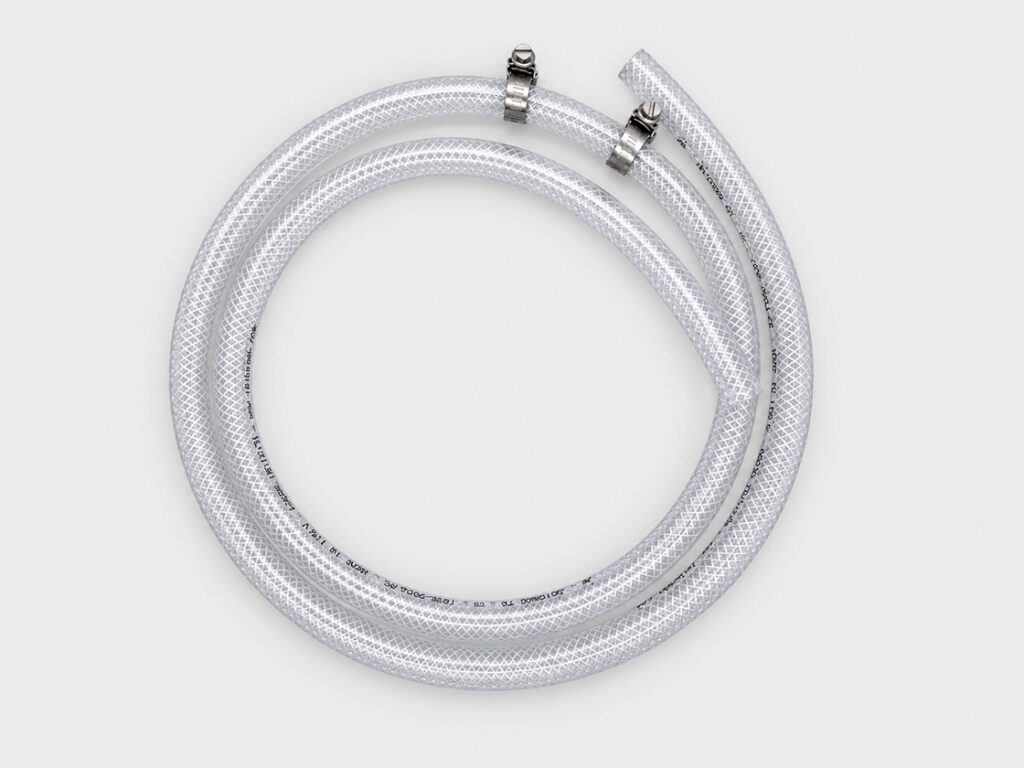
Ensure fresh water is used throughout the staining protocol with the optional Quick Drain System. By rapidly emptying the washing station after each washing step, reagent carryover is reduced, improving staining consistency and supporting reproducible results in multi-step staining procedures.
Technical Specifications
| Method | Immersion (dipping) staining process |
| Capacity | 24 slides per run |
| Baskets | 4x reagent, 1x drying, 1x rinsing* |
| Programs | Store up to 10 programs, each with up to 10 steps |
| Operator Interface | Digital display with keyboard |
| Compliances | Allows compliance with ISO 7218, CE mark |
| Dimensions (W×H×D) | 70.0 x 44.0 x 40.0 cm / 27.6 x 17.3 x 15.7 in |
| Weight | 23.0 kg / 50.7 lb |
* Optional Quick Drain Pump Set available
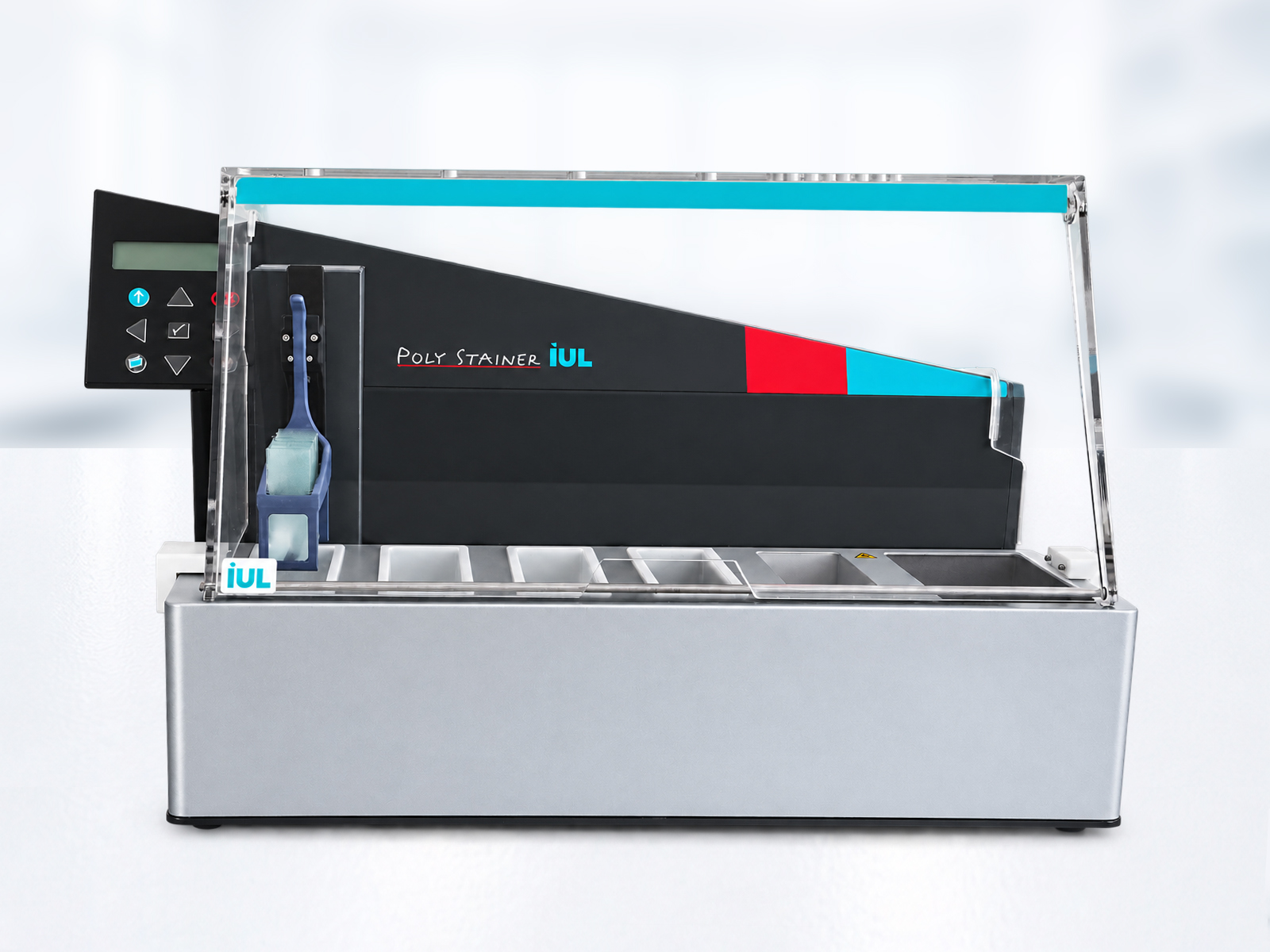
*Panoramic versions differ only from the Classic, Basic and Silver ones by having a transparent glass door.
Specifications subject to change without notice.
Accessories
Tutorial Videos
Downloads
Related Articles
Frequently Asked Questions
The Poly Stainer supports a wide range of microbiology and laboratory staining methods, including Gram staining, Acid-Fast staining, Trichrome staining, and Ziehl–Neelsen staining. Its programmable design also allows laboratories to create and customize staining protocols to meet specific workflow requirements.
The Poly Stainer can process up to 20 microscope slides in a single run, helping laboratories increase throughput while maintaining consistent and reproducible staining results.
Yes. The Poly Stainer can store up to 10 user-defined staining programs, with each program supporting up to 10 sequential steps. Protocols can include dipping, oscillation, rinsing, and drying actions, providing flexibility for a wide variety of staining applications.
Yes. The Poly Stainer features an integrated rinse bath and a drying station with optional warm-air drying. These functions help ensure slides are thoroughly rinsed and properly dried throughout the automated staining process.
The optional Quick Drain System automatically empties and refills the rinse bath after each rinsing step. This helps reduce reagent carryover, improve washing efficiency, and shorten overall staining cycle times.