SphereFlash®
Automatic colony counter and inhibition zone reader
*Cat. 90007000 (ex-works)


*Available for SphereFlash® AI, Colonies PRO, and Halos PRO Softwares.
About SphereFlash®
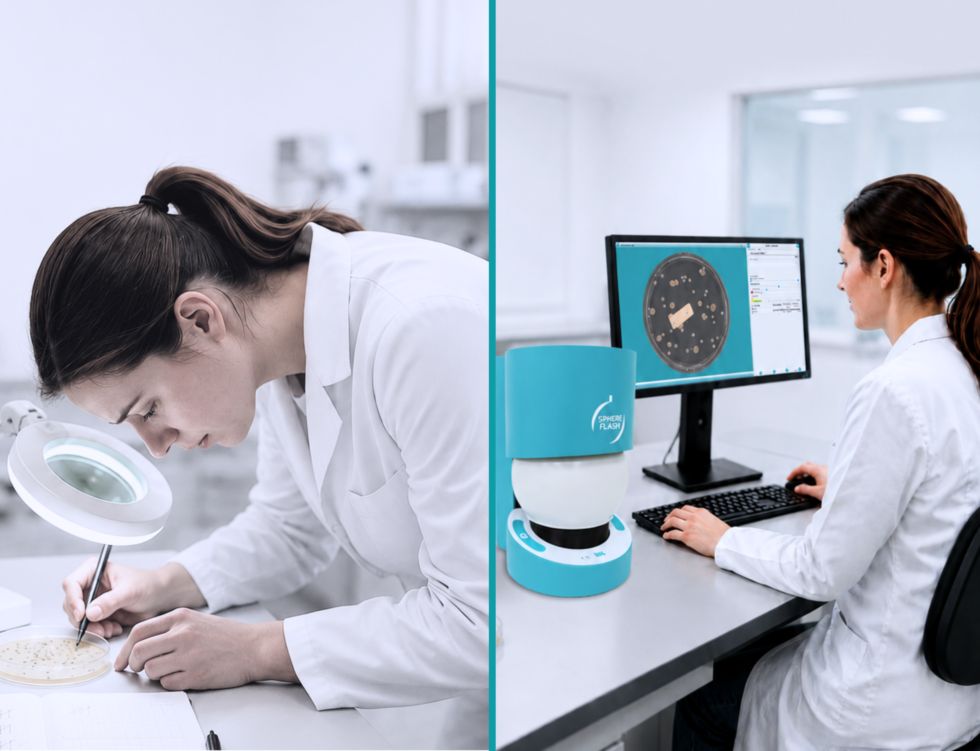
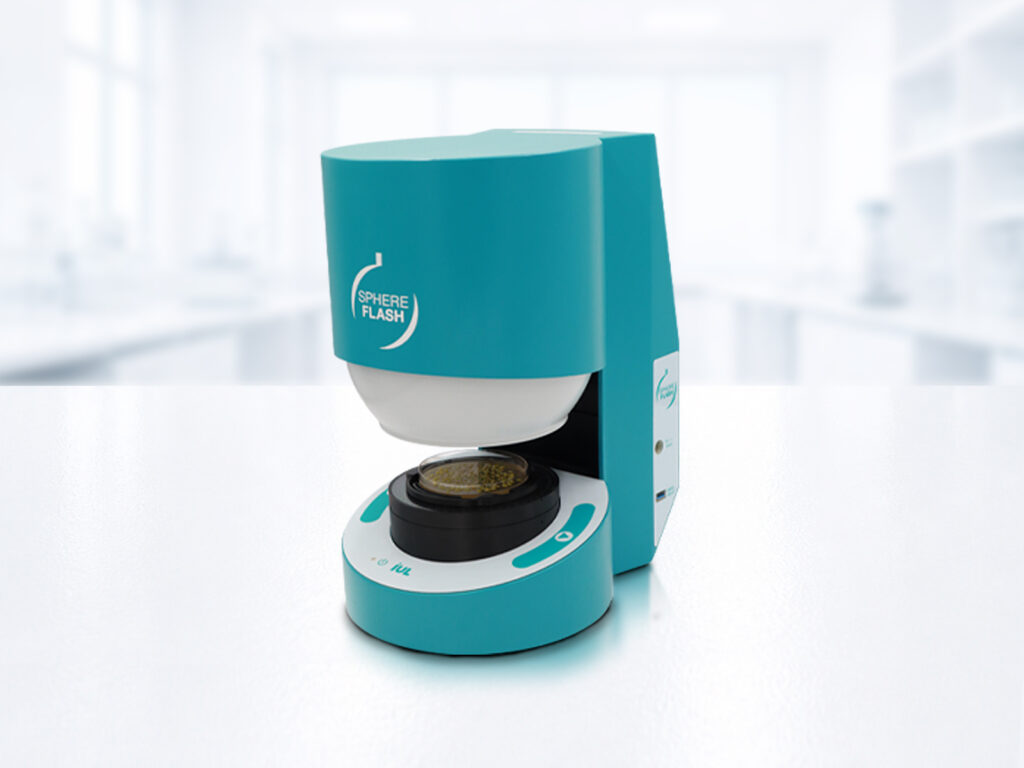
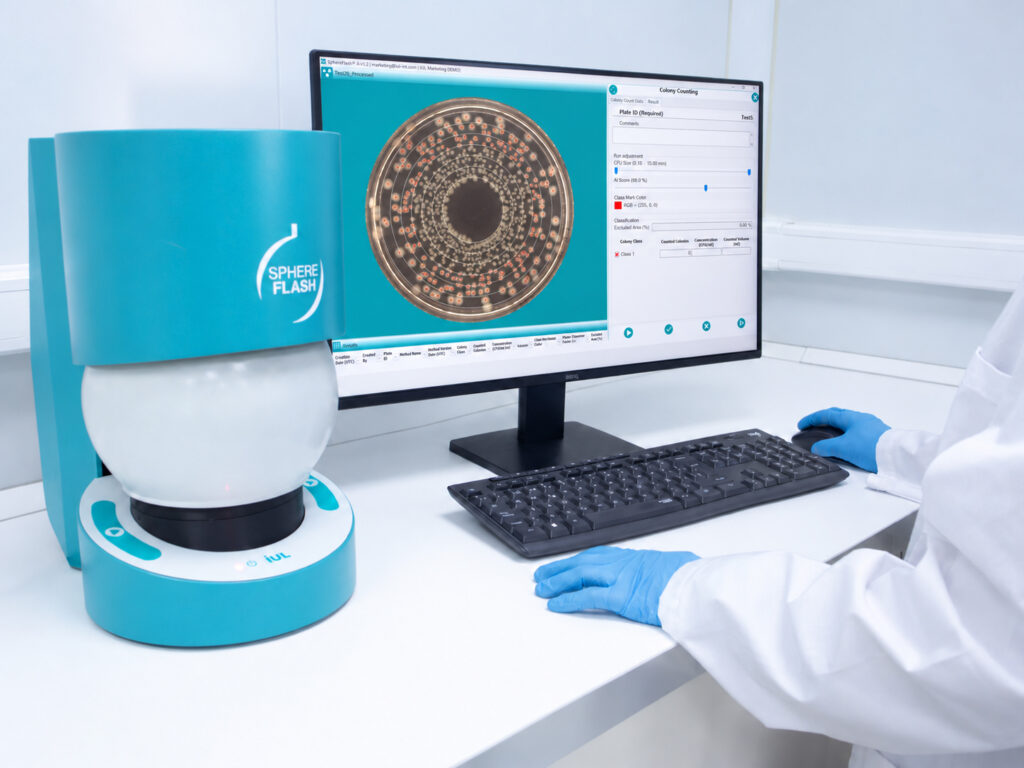
SphereFlash® is an automatic colony counter and inhibition zone reader that brings fast, consistent plate analysis to the microbiology laboratory.
Its patented spherical illumination chamber and flexible top and bottom lighting provide uniform imaging conditions for high-quality image acquisition across different plate types and formats.
Compact in size and scalable through different software options, SphereFlash® adapts to a wide range of counting and inhibition zone measurement needs, while keeping the laboratory professional in control of the final result.
Key Benefits
Optimized illumination and high-quality imaging support consistent colony counting and inhibition zone analysis.
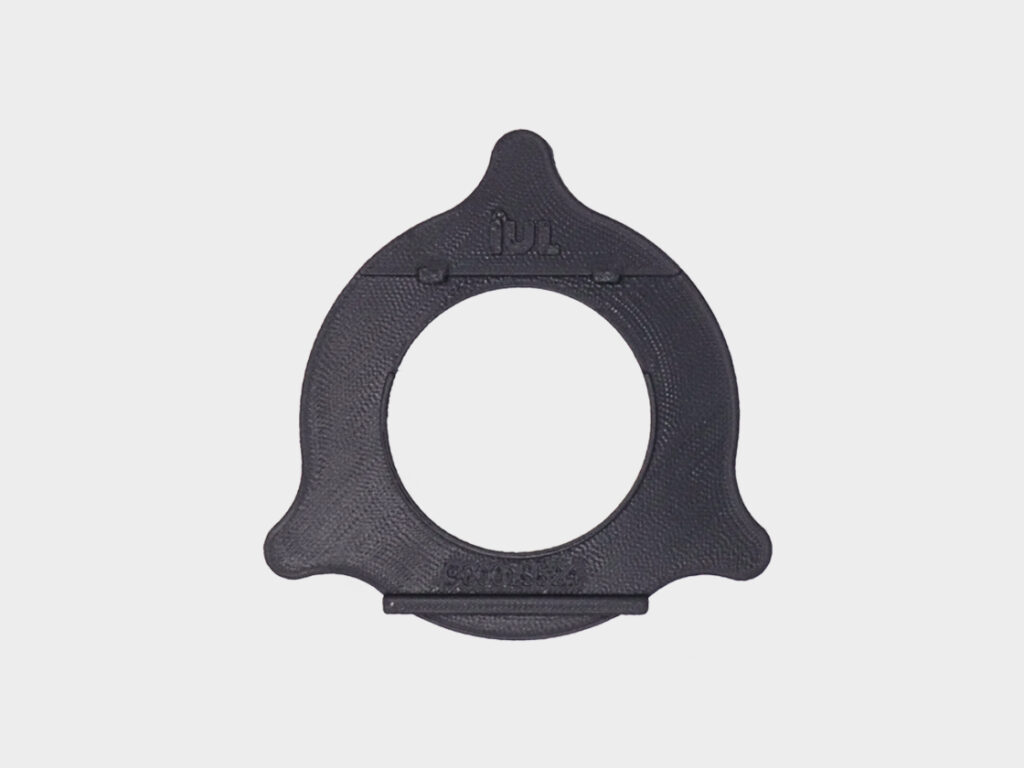
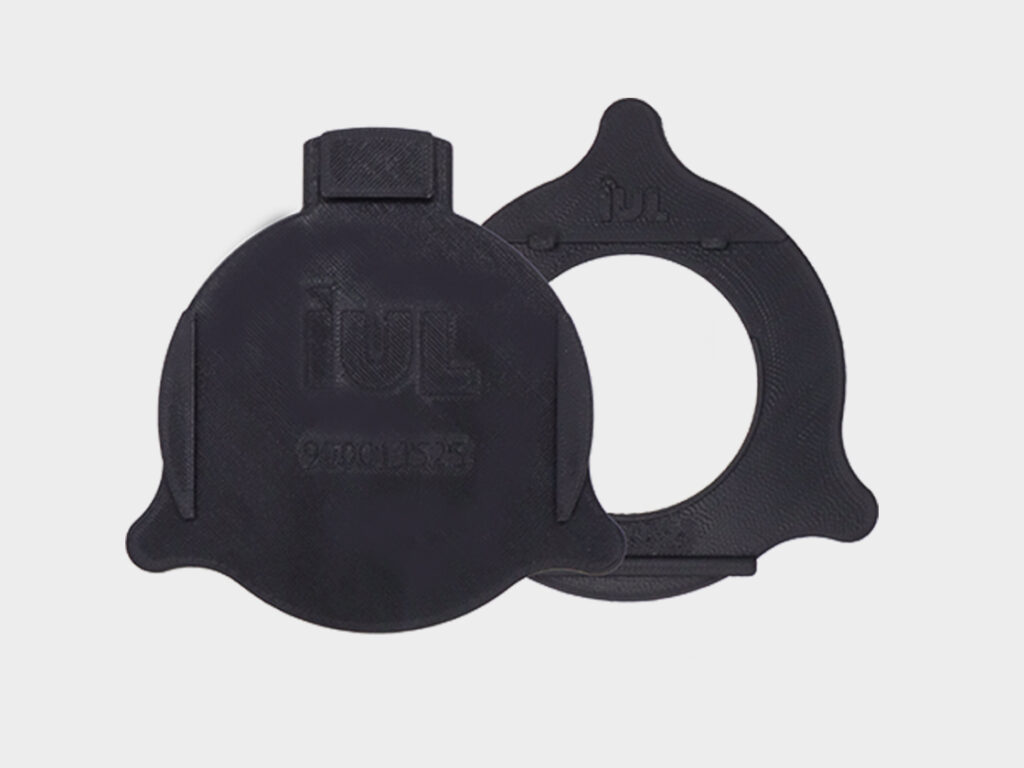
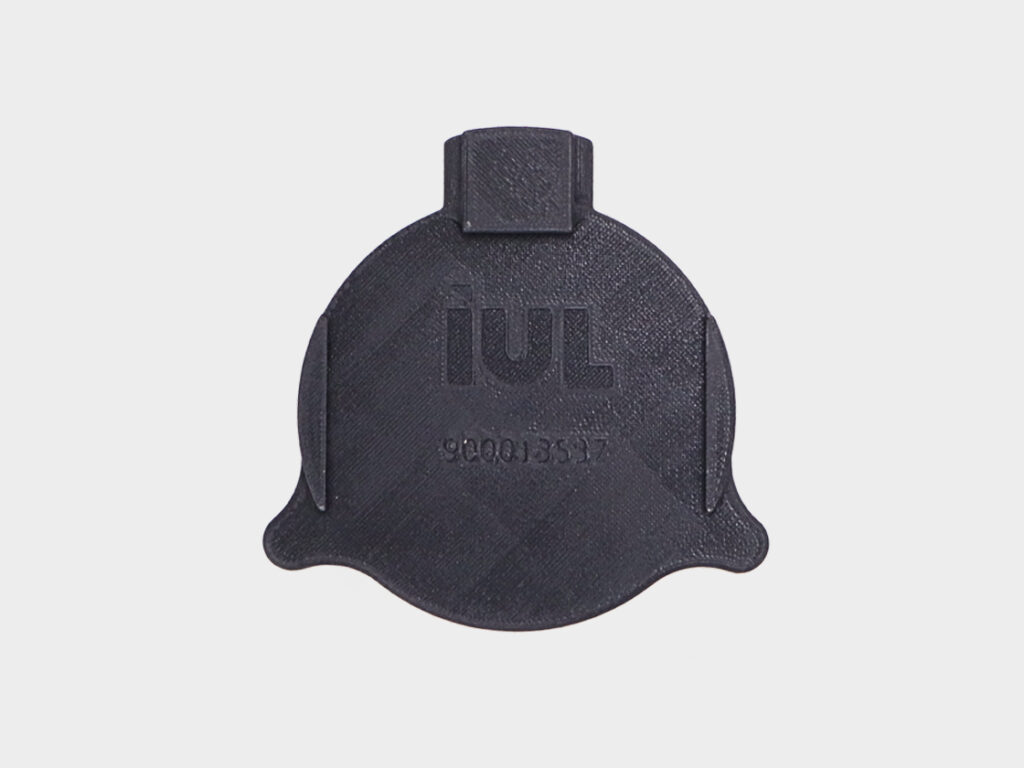
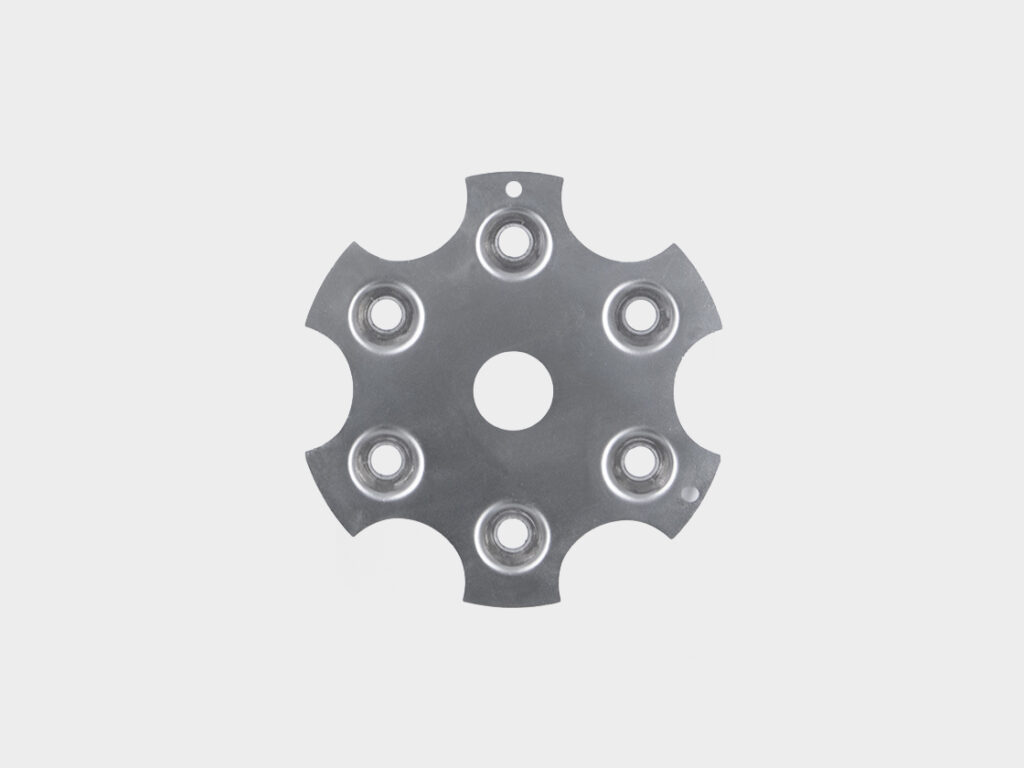
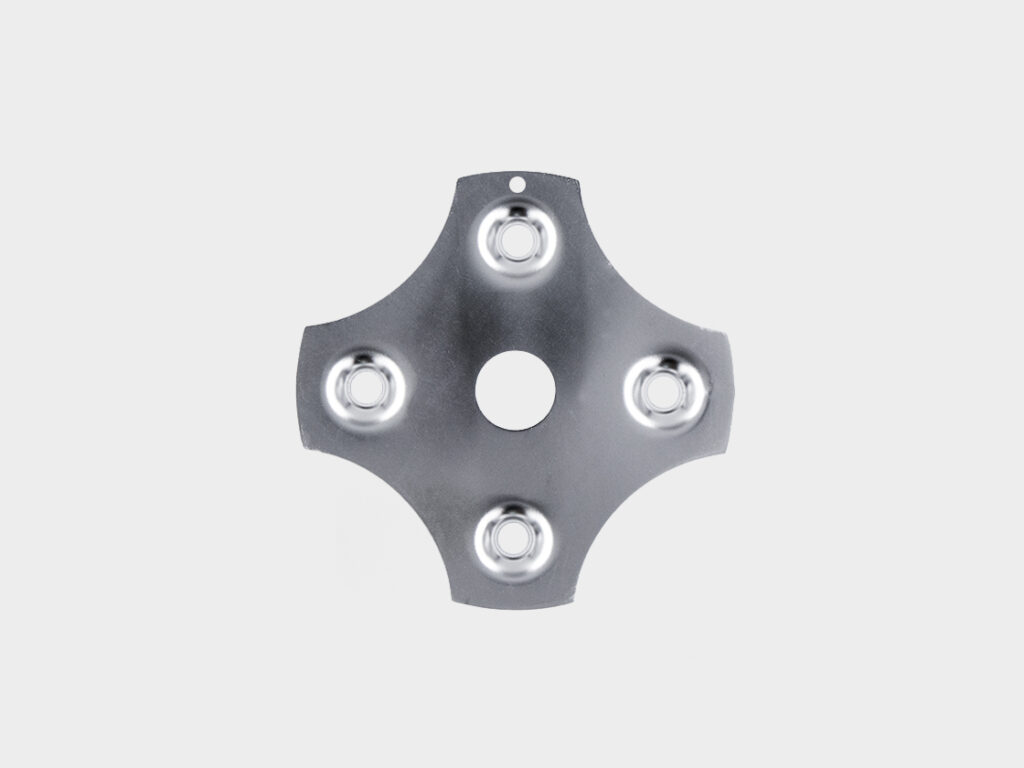
Compatible with different plate formats and types through interchangeable centering devices and adapters.
A compact footprint combined with scalable software for different counting and analysis needs.
Advanced software options support user management, audit trails and traceable results.
Workflow
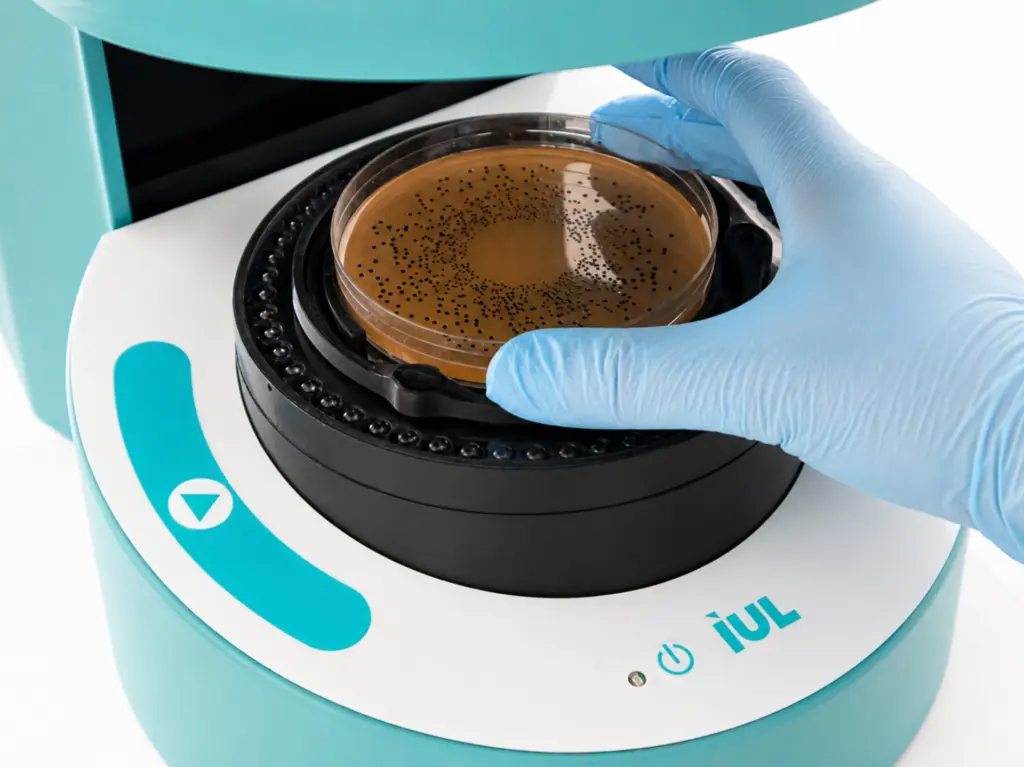
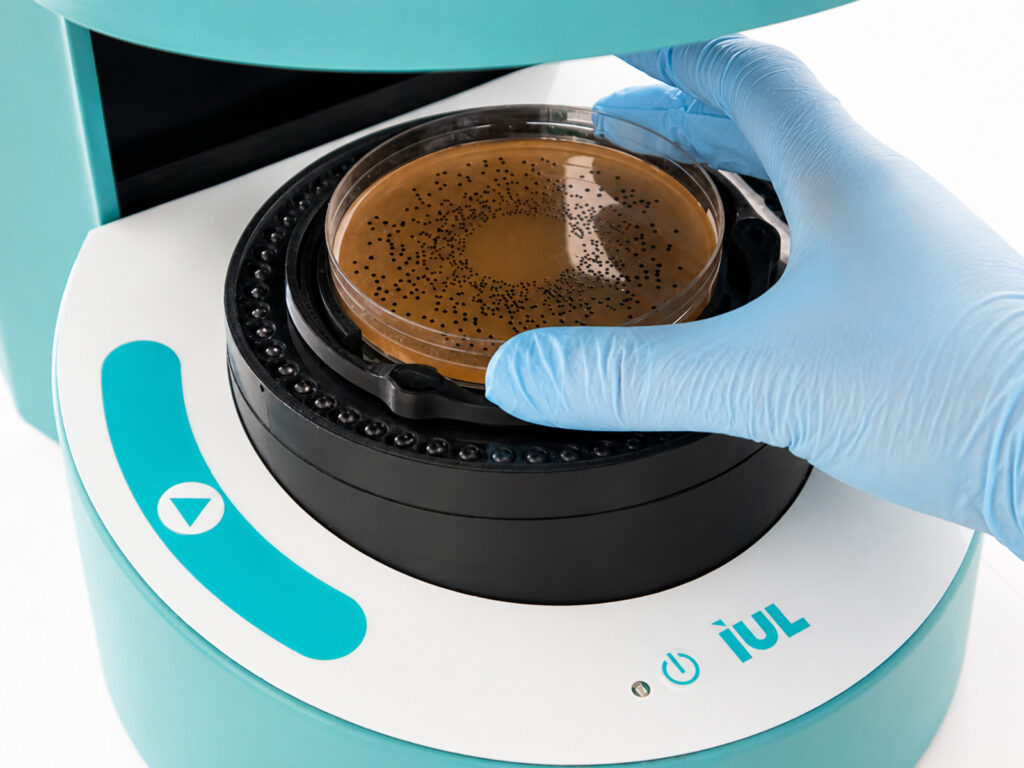
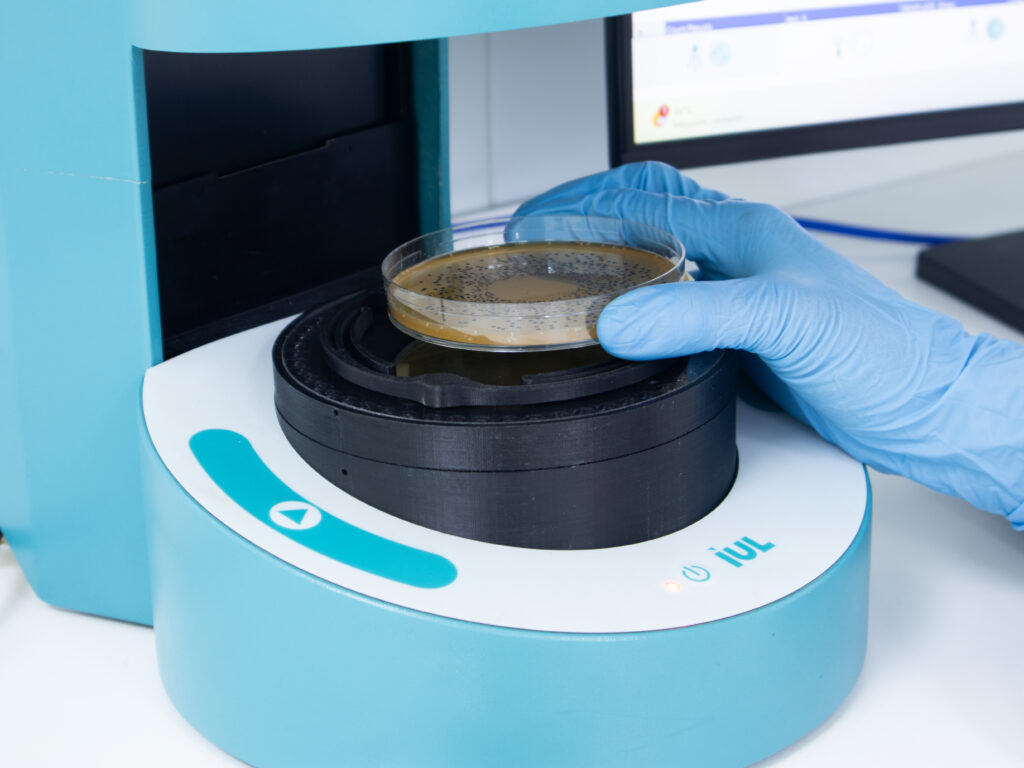
Secure the plate with the centering device or adapter
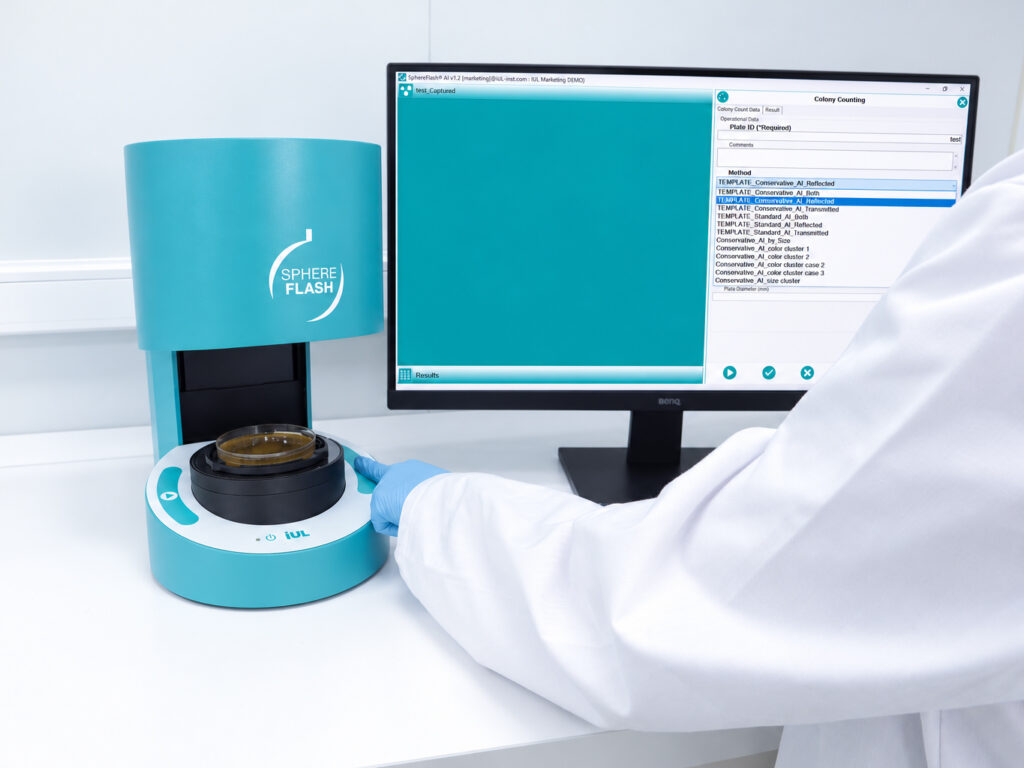
Select the method and press Run
Review the results
Export the results
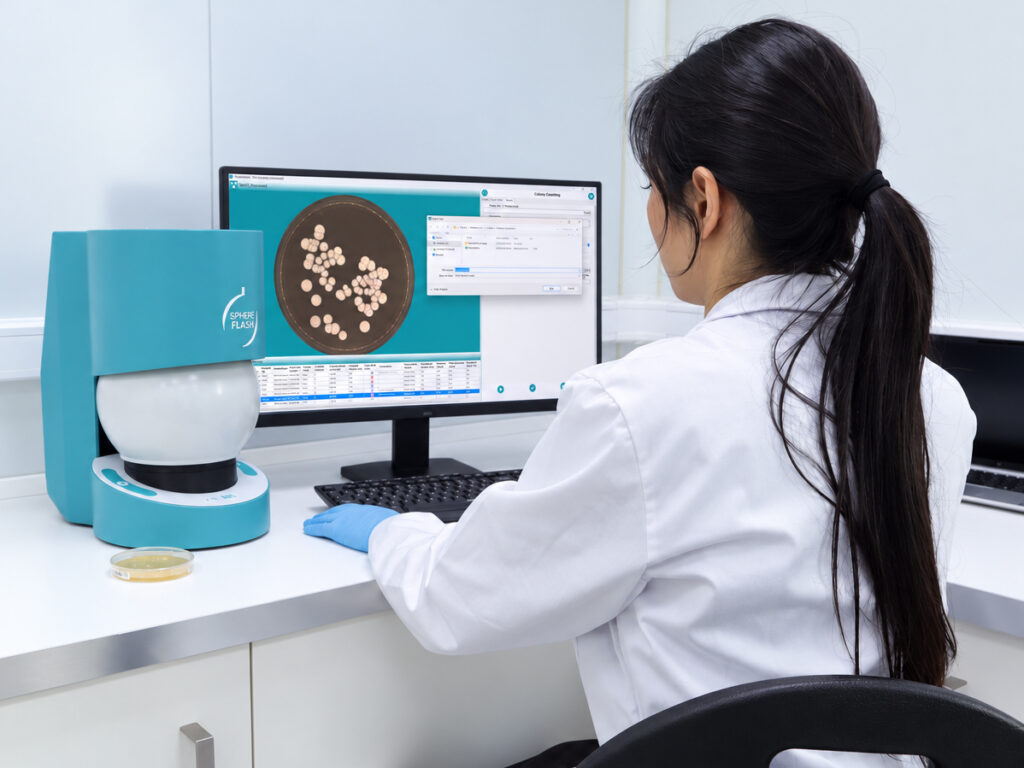
Our Solution at Work
Product Insights
SphereFlash® combines a patented spherical chamber with a flexible illumination system to create uniform lighting across the plate. This provides high-quality, reflection-free images that support accurate colony counting and inhibition zone analysis.
The spherical chamber blocks external light from reaching the plate while distributing the system’s illumination uniformly across the imaging area. This creates consistent lighting conditions and helps minimize reflections and uneven illumination.
Depending on the plate and sample type, the upper and bottom illumination can be used independently or together, allowing the imaging conditions to be adapted to different plate types.
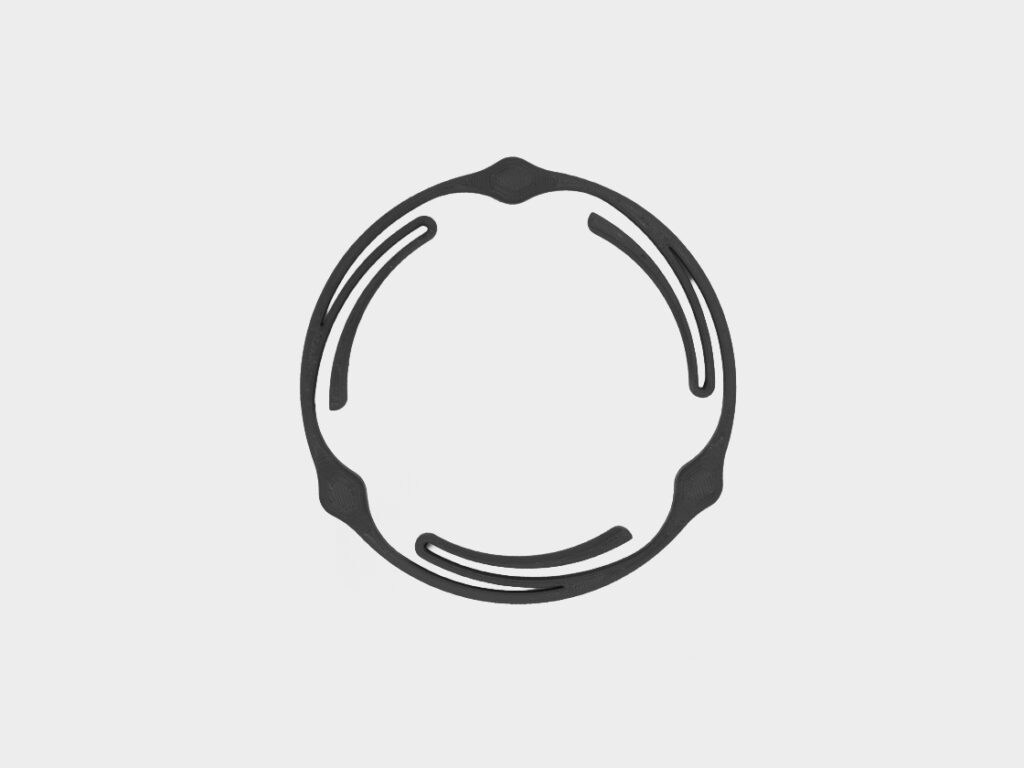
SphereFlash® is designed to accommodate different microbiological plate formats using interchangeable centering devices and adapters.
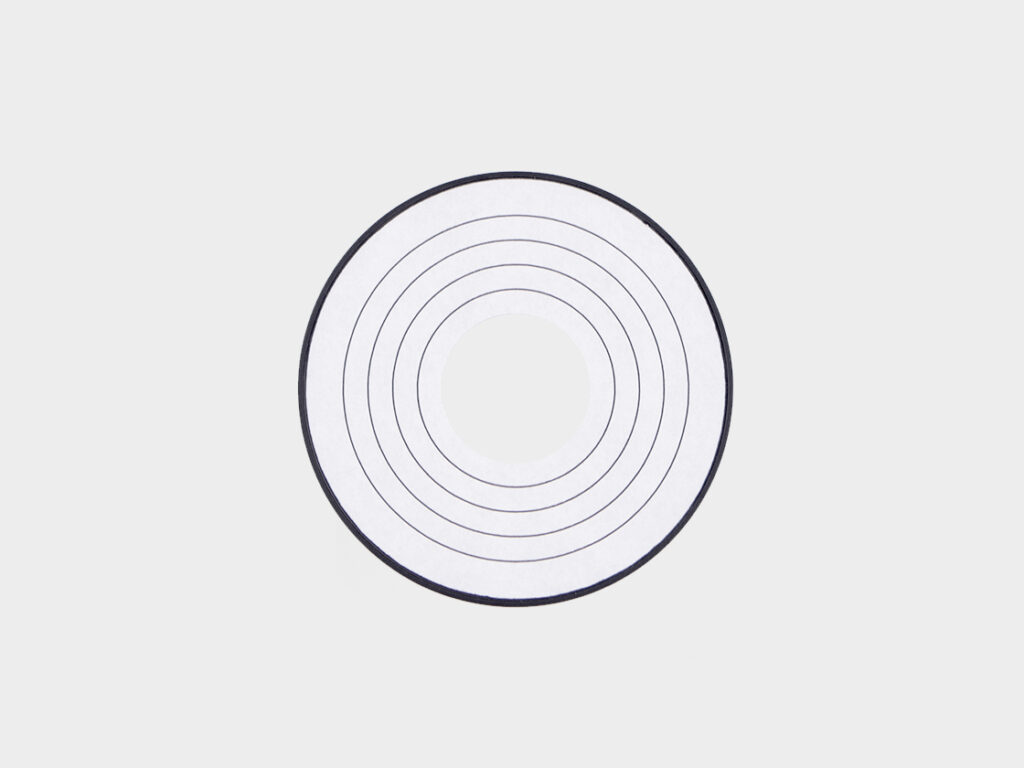
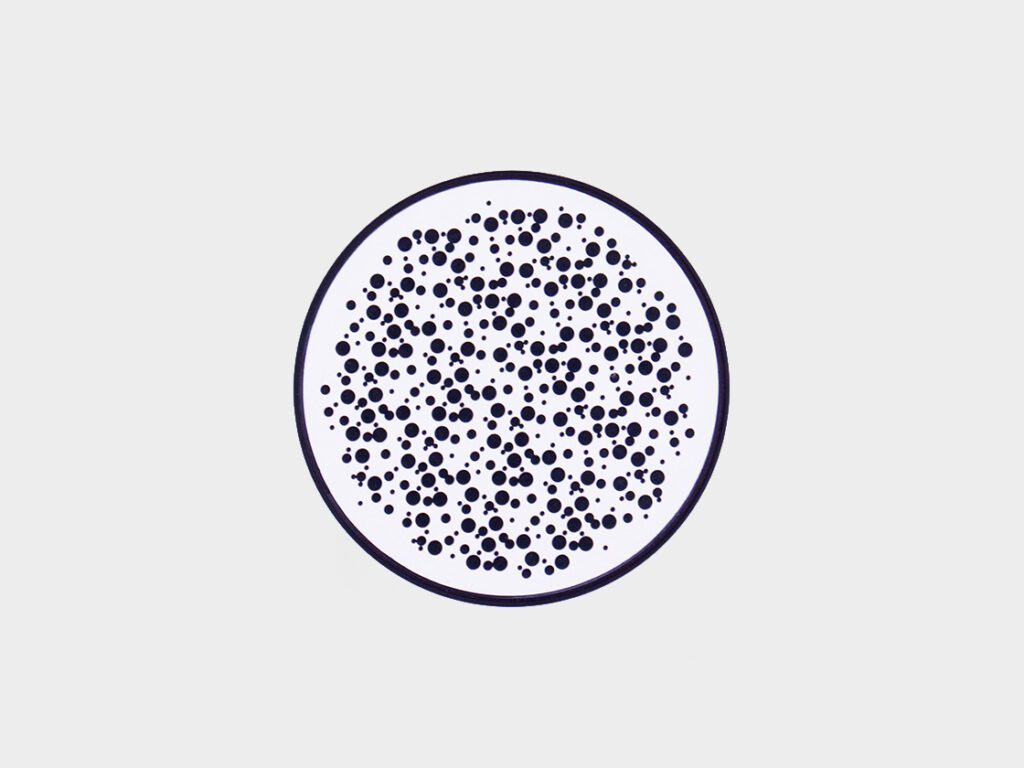
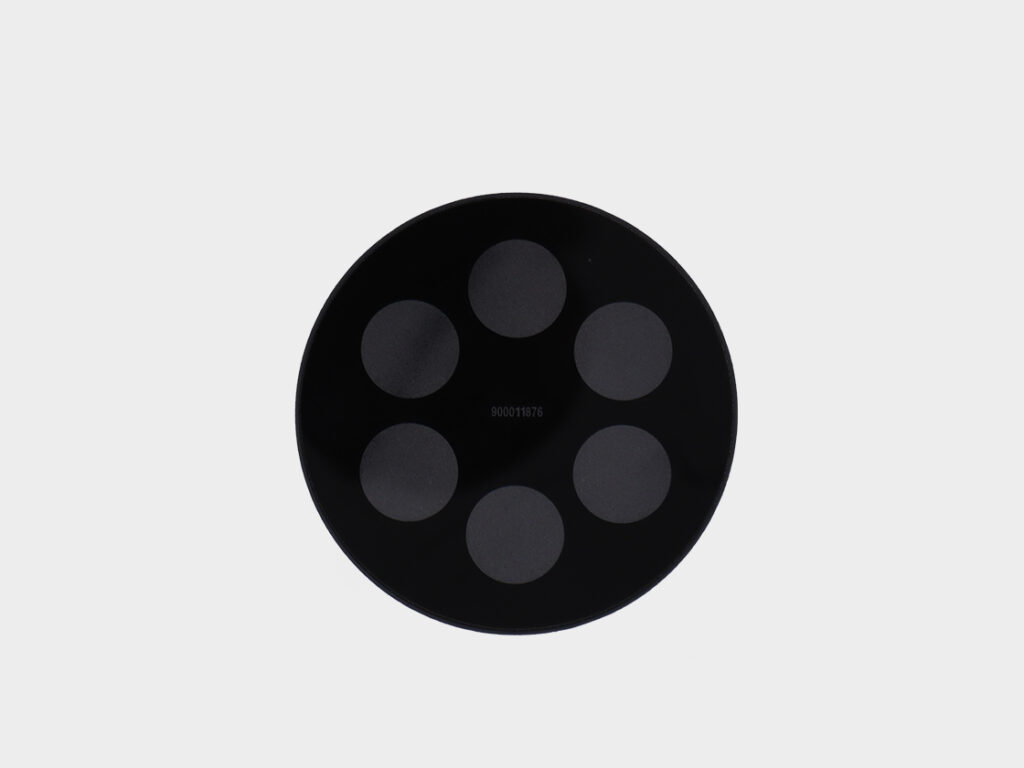
Routine calibration and verification can be performed directly by the user using dedicated calibration and verification disks, helping maintain reliable and repeatable performance over time.
Applications
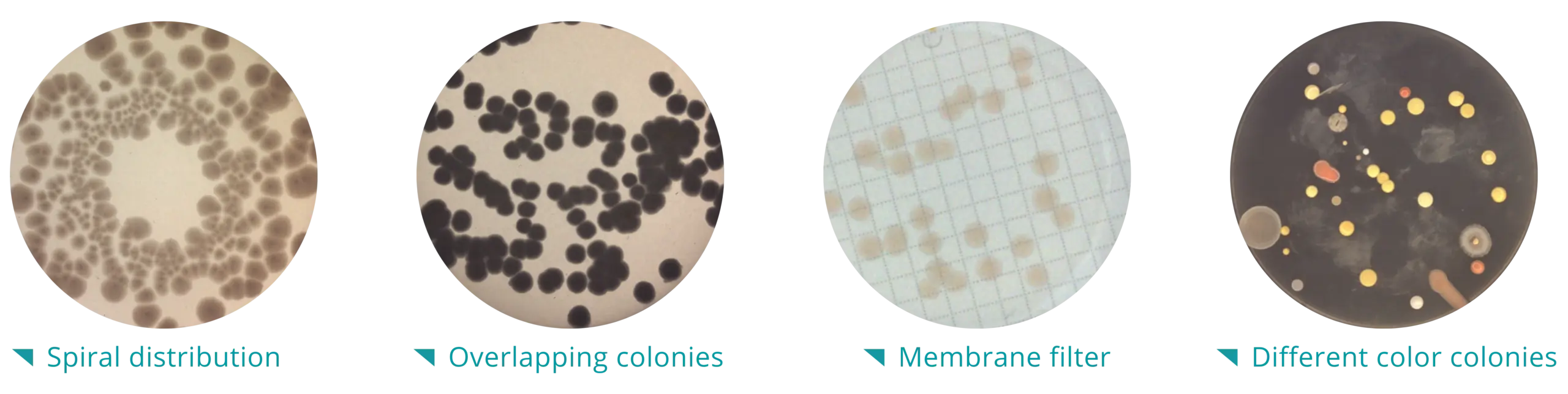
Not every plate is straightforward to count. SphereFlash® AI uses a pre-trained artificial intelligence model to help detect colonies with low contrast, irregular shapes or complex backgrounds. By reducing the need to fine-tune counting settings, AI makes challenging plate analysis more straightforward.
Example plates for SphereFlash® AI
Why SphereFlash® AI?:
- Reduce manual adjustments
- High accuracy and reduced results variability
- Supports 21 CFR Part 11, Subpart B compliance
Go beyond a total colony count with software that lets you define how your plates are analyzed. Colonies PRO combines customizable counting methods with colony classification by color and size, helping your laboratory evaluate different colony groups separately and adapt analysis to specific applications.
Examples of plates for Colonies PRO

Why Colonies PRO?
- Classify colonies by color and size
- Customize counting methods
- Supports 21 CFR Part 11, Subpart B compliance
Bring straightforward automation to your daily microbiology workflow. Included with SphereFlash®, Colonies LITE provides reliable colony counting for routine plate analysis, together with practical tools to review and document results. It is a natural fit for laboratories focused on standard counting tasks. IUL Instruments.
Examples of plates for Colonies LITE

Why Colonies LITE?
- Automate routine colony counting on standard plates
- Review results and generate reports for everyday documentation
- Export counting data and images for further analysis
Expand SphereFlash® beyond colony counting with Halos PRO. High-quality plate images captured with SphereFlash® enable clear detection of inhibition zone boundaries, supporting accurate automatic measurements and analysis, including USP <81> Antibiotic Potency Test calculations.
Technical specs
| SphereFlash® | |
|---|---|
| Cat. | 90007000 |
| Applications | |
| Plate Compatibility | Petri dishes (55 up to 90 mm), Petrifilm™, Compact Dry™, MC-Media Pad®, Easy Plate™ and filtration membranes. |
| Plating Method Compatibility | Spread, pour, surface and spiral plating. |
| Media Compatibility | Standard, selective, and chromogenic agar. |
| Inhibition zone reading compatibility | Supports antibiogram and antibiotic strip. |
| General | |
| Sensor | CMOS 5 MP colour Camera |
| Illumination system | Upper and bottom LED. Patented spherical chamber. |
| Certifications | CE mark, RoHS and WEEE directives, electrical safety tested to IEC standards. |
| Dimensions (L×W×H) | 28.8 x 37.1 x 22.0 cm / 11.3 x 14.6 x 8.7 in |
| Weight | 5.5 kg / 12.1 lb |
| SphereFlash® AI | Colonies LITE | Colonies PRO | |
|---|---|---|---|
| Cat. | Image Pack + Storage Pack | Cat. 90007000 | Cat. 90007001 |
| AI-powered colony counting | ✓ | x | x |
| Minimum colony diameter | 0.046 mm* | 0.3 mm* | 0.046 mm* |
| Automatic Calibration and Verification | ✓ | ✓ | ✓ |
| Data Export in PDF and CSV | ✓ | ✓ | ✓ |
| Image Export | ✓ | ✓ | ✓ |
| Statistical Report | ✓ | ✓ | ✓ |
| Customizable Report Logo | x | x | ✓ |
| LIMS interface connection | ✓ | x | ✓ |
| 21 CFR Part 11 Subpart B Compliance | ✓ | x | ✓ |
| Audit Trail and User Management | ✓ | x | ✓ |
| Internet connection requirement | ✓ | x | x |
| License Type | Yearly Subscription | Standard Inclusion with SphereFlash® System | One-time payment |
*Contrast-dependent
| Halos PRO | |
|---|---|
| Cat. | 90007002 |
| Inhibition Zone Measurement | ✓ |
| Antibiotic Potency Test according to the procedure of US Pharmacopoeia | ✓ |
| Number of halos | 8* |
| Halo diameter resolution | 0.01 mm |
| Automatic Calibration and Verification | ✓ |
| Data Export in PDF and CSV | ✓ |
| Image Export | ✓ |
| Statistical Report | ✓ |
| Customizable Report Logo | ✓ |
| LIMS interface connection | ✓ |
| 21 CFR Part 11 subpart B Compliance | ✓ |
| Audit Trail and User Management | ✓ |
| Internet connection requirement | x |
| License Type | One-time payment |
*With 90mm Petri dishes
Tutorial Videos
Accessories
Downloads
- Brochure English, French, German Not available
- IFUs English, French Not available
- Software comparaison table French, German Not available
Frequently Asked Questions
SphereFlash® can analyze 55–90 mm Petri dishes and widely used commercial microbiology media, including Compact Dry™, Petrifilm™, MC-MEDIA® PAD, and Easy Plate. The system supports the detection and counting of bacteria, yeasts, and molds on chromogenic, selective, and general-purpose agar, as well as plates used for membrane filtration microbiology.
Yes. SphereFlash® uses high-resolution imaging and dual illumination to improve the detection of crowded, overlapping, clustered, or low-contrast colonies. When additional review is required, users can manually add, remove, or exclude colonies to refine the final count.
Yes. SphereFlash® supports automated inhibition zone measurement with the Halos PRO software. It can be used for inhibition zone analysis in research, pharmacopeial applications, and routine microbiology workflows.
SphereFlash® uses a patented spherical imaging chamber to create a controlled and consistent illumination environment. By minimizing shadows, reflections, and variations in ambient light, the system helps laboratories achieve standardized and reproducible colony-counting results across operators and samples.
Yes. Users can manually add, remove, or exclude colonies and inhibition zones when reviewing results. Exclusion areas can also be defined to prevent artifacts such as labels, bubbles, debris, or unwanted contamination from affecting the analysis.
SphereFlash® includes calibration and verification disks for routine performance checks. These checks can be performed directly in the laboratory, helping users verify system performance without requiring routine external calibration service or unnecessary instrument downtime.
The appropriate SphereFlash® software depends on the level of automation, traceability, and analysis required:
Colonies LITE (standard inclusion): Designed for basic colony counting.
Colonies PRO: Adds custom methods, audit trails, traceability, and LIMS connectivity for advanced colony-counting workflows.
Halos PRO: Designed for inhibition zone measurement and includes custom methods, audit trails, traceability, and LIMS connectivity.
SphereFlash® AI: Provides advanced automated image analysis for complex plates and higher-throughput workflows, together with custom methods, audit trails, traceability, and LIMS connectivity.
Not for standard SphereFlash® software. Colonies LITE, Colonies PRO, and Halos PRO can operate without an internet connection. An internet connection is required for SphereFlash® AI when images are processed using its cloud-based analysis capabilities.
Yes. A connected PC is required when using Colonies LITE, Colonies PRO, or Halos PRO. With SphereFlash® AI, the instrument only needs to be connected when capturing new images. Previously saved images can be uploaded and analyzed from the PC without the instrument being connected.
Yes. SphereFlash® supports results export in multiple formats, including CSV, Excel, PNG, and PDF. Reports can include annotated images, simplifying microbiology documentation, data review, and result sharing.
SphereFlash® software configurations including Colonies PRO, Halos PRO, and SphereFlash® AI provide features such as user management, audit trails, traceability, and controlled data export that can support laboratories implementing 21 CFR Part 11 Subpart B data-integrity and electronic-record workflows.
Compliance ultimately depends on the laboratory's complete validated system, procedures, configuration, and intended use.
Yes. LIMS integration is available with Colonies PRO, Halos PRO, and SphereFlash® AI, helping laboratories transfer results into digital laboratory workflows and reduce manual data handling.
SphereFlash® users have access to training videos, product documentation, and remote technical assistance. These resources help laboratories with instrument installation, software operation, method setup, and optimization of colony-counting and inhibition-zone workflows.
Related Articles
- Success Stories, Technical insights